Introduction Of SEO:-
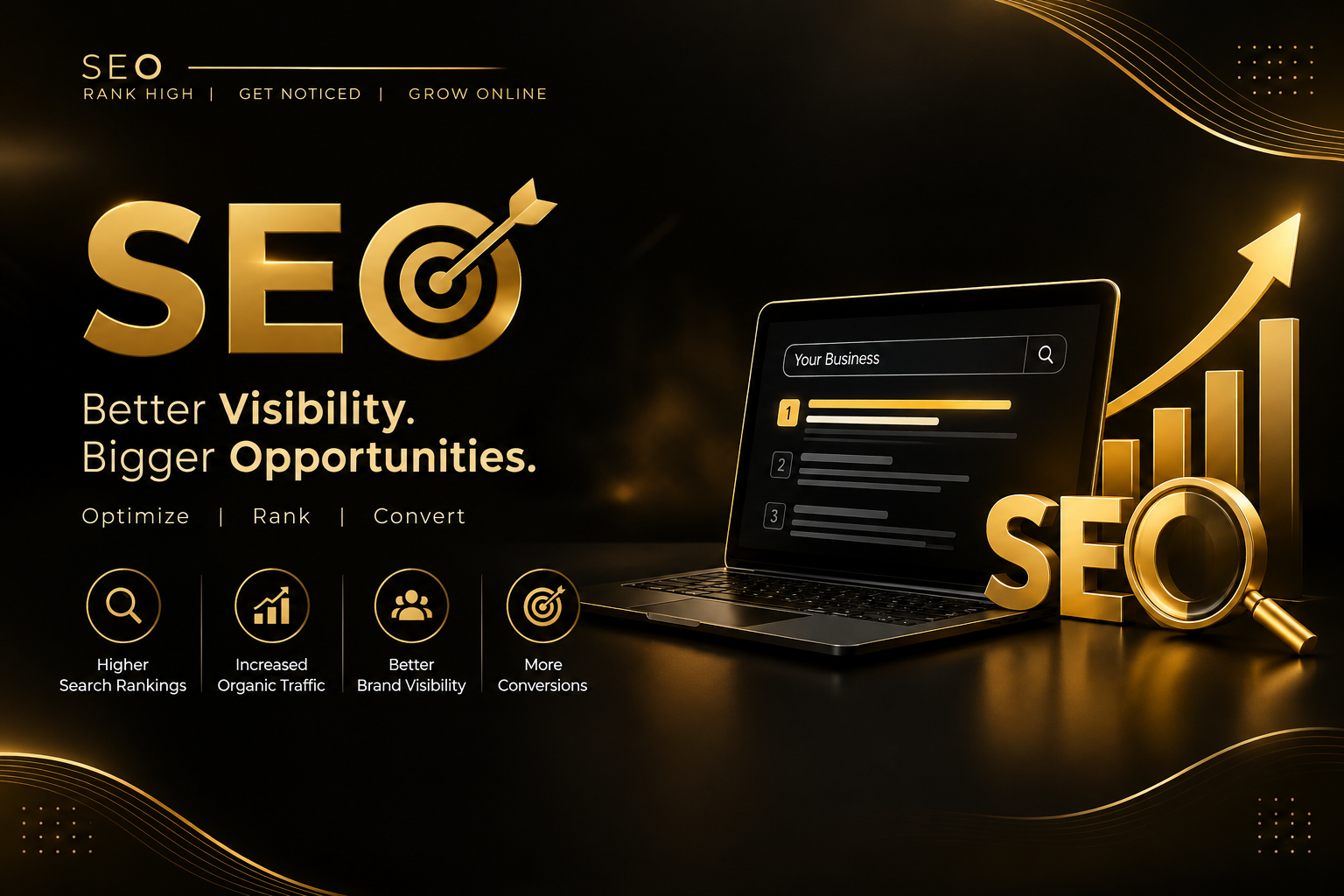
Search Engine Optimization (SEO) is a powerful digital marketing strategy that helps businesses improve their visibility on search engines like Google. It focuses on optimizing website content, keywords, technical performance, and overall user experience so that a website can appear higher in relevant search results
.A strong SEO strategy helps attract the right audience, increase organic website traffic, build online credibility, and create long-term digital growth. From keyword research and on-page optimization to technical SEO and quality content, every element works together to make a website more search-friendly and accessible to potential customers.
SEO Provides Services:-
Our SEO services are designed to improve your website’s visibility, attract relevant visitors, and strengthen your online presence. We use strategic optimization techniques to help your business reach the right audience through organic search.
Our SEO Services Include:
.Keyword Research & Strategy
.On-Page SEO
.Off-Page SEO
.Technical SEO
.Local SEO
.Content Optimization
.Competitor Analysis
.Website SEO Audit
What is Keyword Research Strategy:-
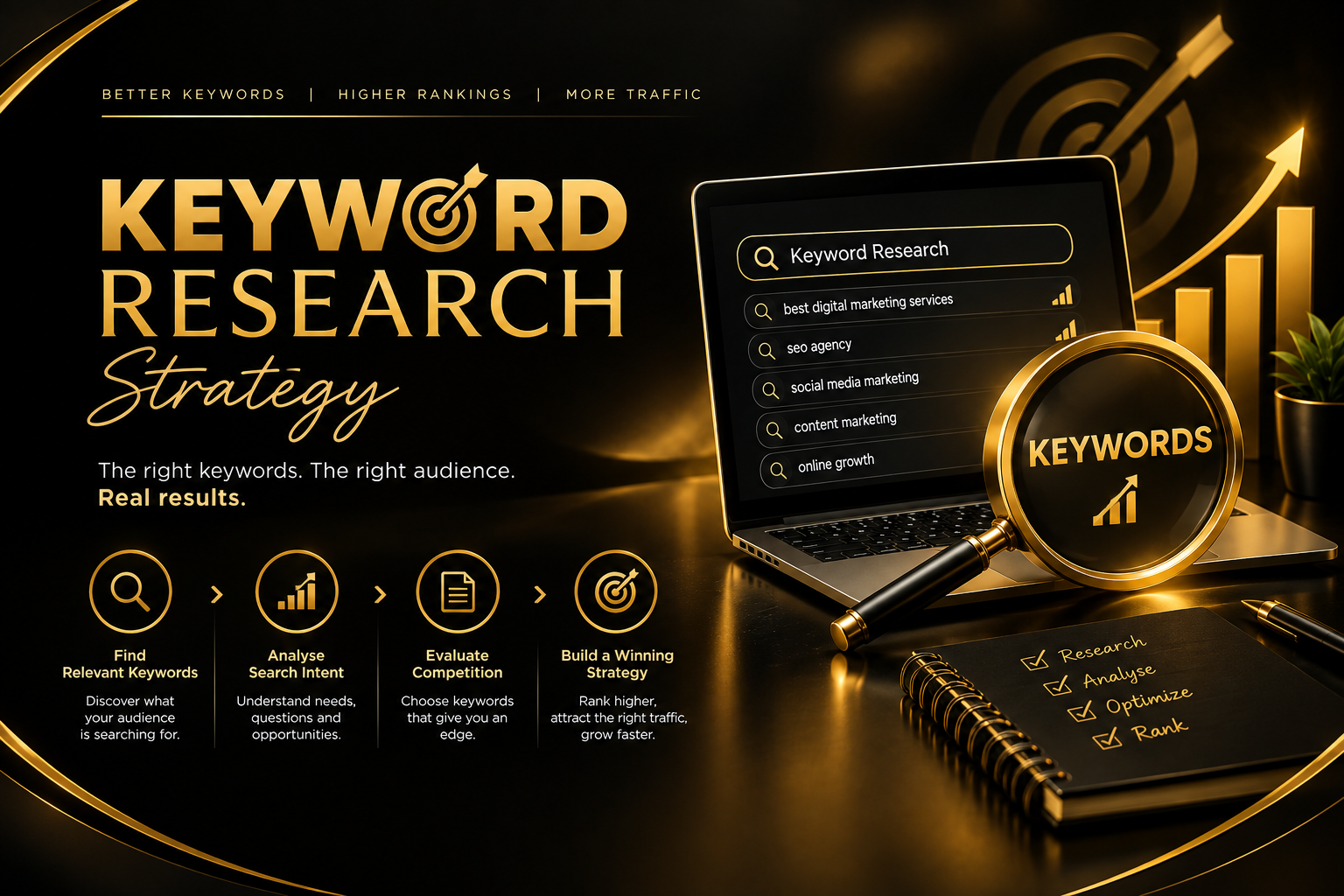
Keyword Research Strategy is the process of finding and selecting the words or phrases that people type into search engines like Google when looking for a product, service, or information
.For example, if a business provides digital marketing services, relevant keywords could include: “digital marketing agency” “SEO services” “social media marketing agency” “Google Ads services”A good keyword research strategy involves understanding the target audience, identifying relevant search terms, analyzing search volume and competition, studying user, and selecting keywords that can help attract relevant visitors to a website
.A well-planned keyword strategy helps optimize website pages, headings, content, meta descriptions, and other SEO elements around relevant search terms. It also helps businesses discover new content opportunities, reach the right audience, increase organic visibility, and attract more qualified traffic.
What Is On -Page SEO
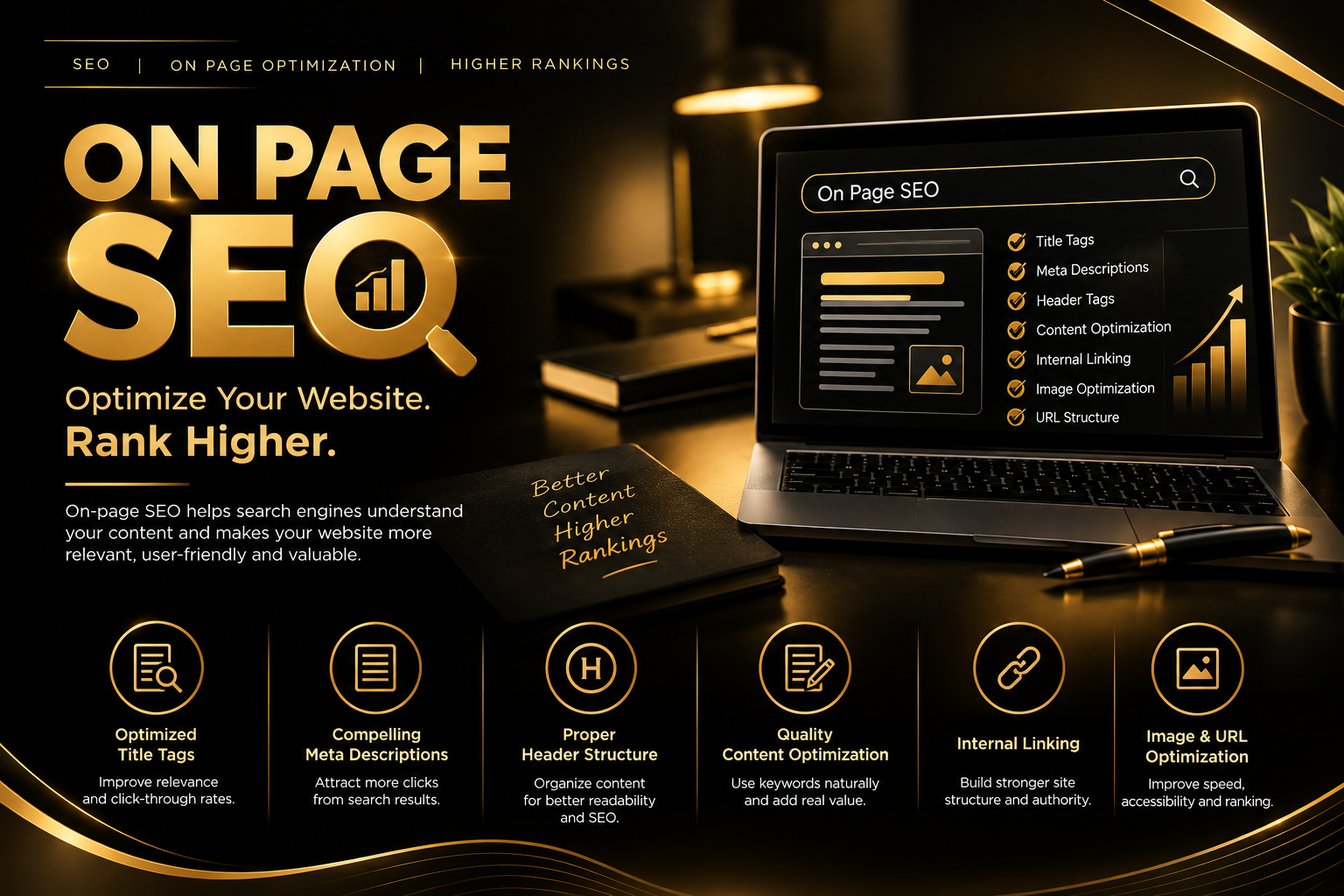
On-Page SEO improves the quality, structure, and relevance of website pages to help search engines understand and rank them effectively.On-Page SEO is the process of optimizing individual web pages to improve their visibility and ranking on search engines. It includes optimizing keywords, title tags, meta descriptions, headings, URLs, images, internal links, and website content. Effective on-page SEO also focuses on readability, mobile-friendliness, page speed, and user experience.
These improvements help search engines understand the content better and make it easier for users to find relevant information.
On-Page SEO strategy optimizes keywords, headings, content, URLs, images, meta tags, and internal links to improve search visibility, website relevance, user experience, and organic traffic
.On-page SEO strengthens each webpage by strategically arranging valuable information, improving content relevance, refining page elements, and creating a smooth browsing experience that supports better visibility and meaningful audience engagement.
What Is Off- The -Page SEO:-
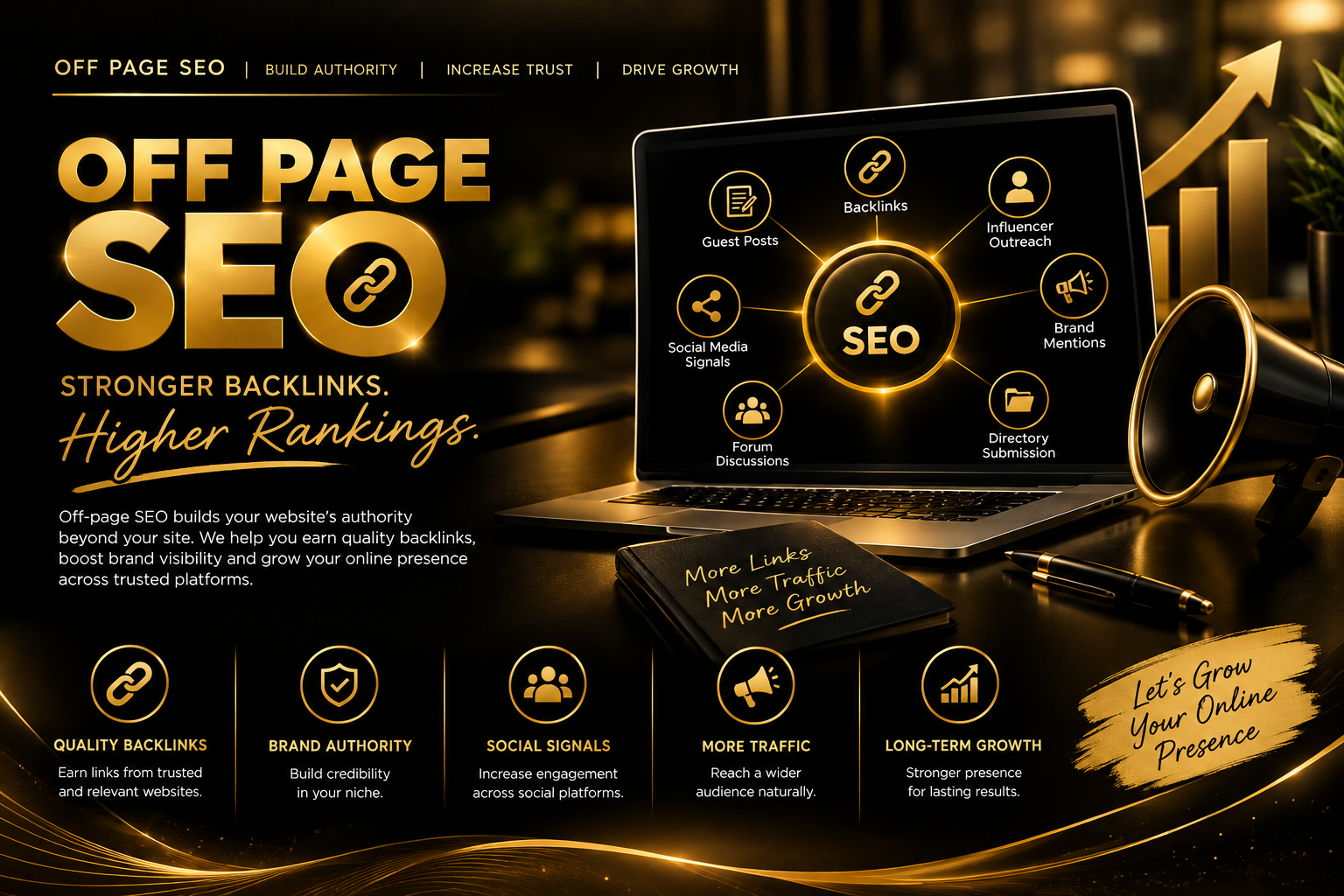
Off-Page SEO refers to activities performed outside a website to improve its authority, reputation, and visibility in search engine results. It focuses on building trust and credibility through external signals that show search engines that a website is valuable and relevant.
Key off-page SEO activities include link building, guest posting, business directory listings, social media promotion, influencer outreach, brand mentions, and online reputation management. High-quality backlinks from relevant and trustworthy websites can strengthen a website’s authority and support better search visibility.
Off-page SEO also involves building relationships with industry websites and creating content that others naturally want to reference or share
.A consistent off-page SEO strategy can help businesses expand their online presence, reach new audiences, strengthen brand recognition, and attract more relevant organic traffic over time.
What Is Technical SEO:-
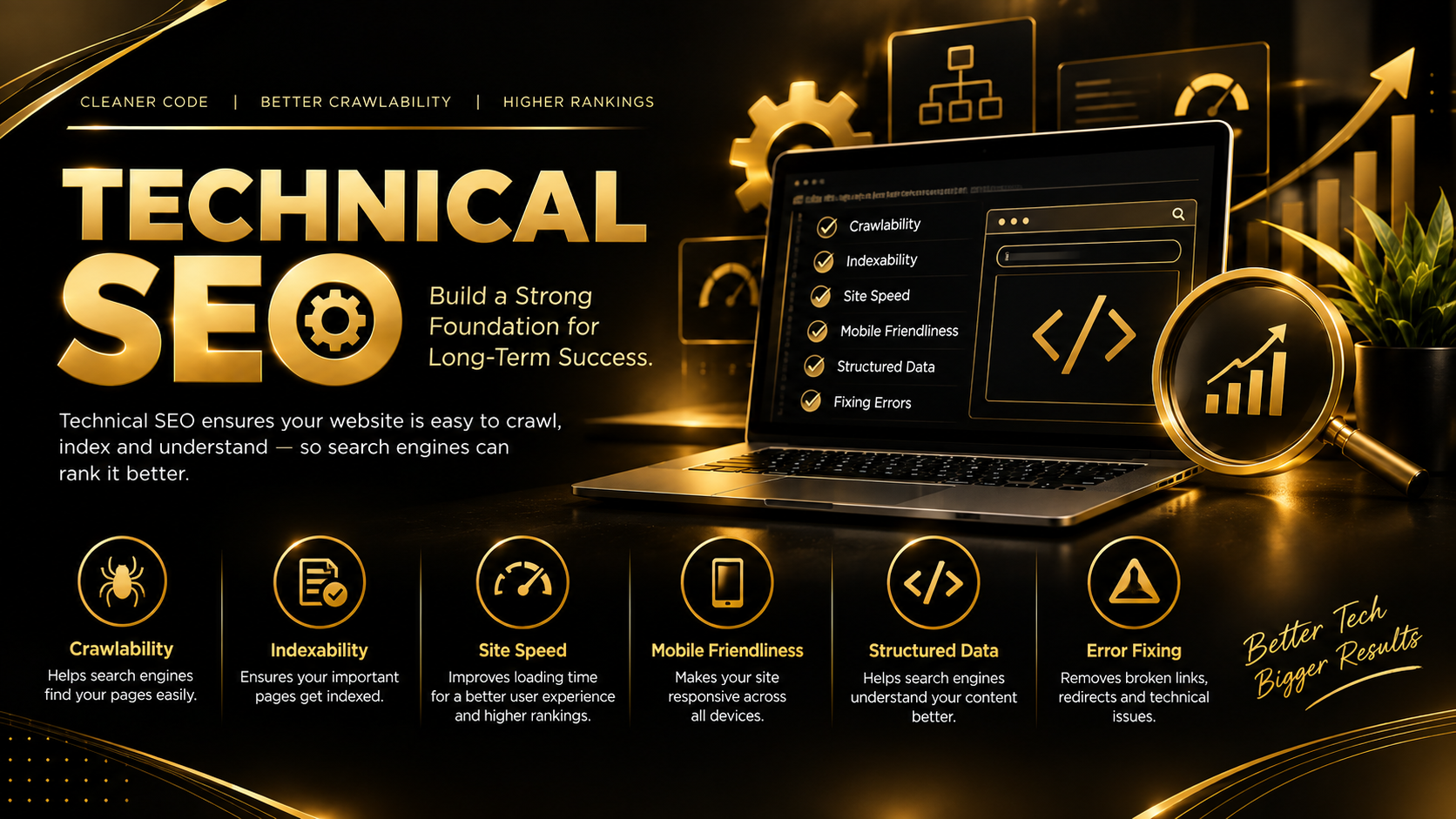
echnical SEO improves website speed, structure, security, mobile usability, crawling, and indexing, helping search engines understand and rank webpages efficiently.Technical SEO is the process of improving a website’s technical structure and performance so that search engines can efficiently crawl, understand, and index its pages. It focuses on the behind-the-scenes elements that influence website accessibility, speed, security, and search visibility
.Key areas of technical SEO include improving page loading speed, ensuring mobile responsiveness, creating and optimizing XML sitemaps, managing robots.txt files, fixing broken links, implementing HTTPS security, and maintaining a clear website structure. It also involves resolving duplicate content, improving URL structures, and using structured data when appropriate
.A strong technical SEO foundation helps search engines discover and process.
What Is Local SEO:-
Local SEO is a digital marketing strategy that helps businesses improve their visibility in location-based searches. It is especially useful for businesses that serve customers within a specific city, area, or region. Local SEO helps potential customers discover a business when they search for nearby products, services, or solutions on search engines.
A local SEO strategy includes optimizing a Google Business Profile, maintaining accurate business information, using location-based keywords, creating locally relevant content, managing online reviews, and building citations across trusted directories. It can also involve optimizing website pages for specific locations and ensuring consistent contact details across online platforms
.Effective local SEO helps businesses connect with nearby customers who are actively searching for their services. It can increase local search visibility, generate more website visits, phone calls, direction requests, and customer inquiries. By maintaining accurate information and building a trustworthy online presence, businesses can strengthen their connection with their local audience and support .

What Is Content Optimization:-

Content optimization is the process of improving website content so it becomes more useful, relevant, engaging, and search-friendly for the target audience. It involves reviewing existing content and making strategic improvements to its quality, structure, clarity, and relevance
.An effective content optimization strategy includes using relevant keywords naturally, creating clear headings and subheadings, improving readability, updating outdated information, adding useful examples, and organizing information in an easy-to-understand format. It also involves optimizing title tags, meta descriptions, images, internal links, and content structure where appropriate
.Well-optimized content should answer users’ questions and provide genuine value rather than simply focusing on search engine rankings. Fresh, informative, and audience-focused content can encourage visitors to spend more time on a website and explore additional pages. Regular content optimization helps maintain accuracy, improve user experience, strengthen search visibility.
What Is Competitor Analysis:-
Competitor analysis in SEO is the process of studying the websites and search strategies of businesses that compete for the same target audience and keywords. It helps identify what competitors are doing well and where opportunities exist to improve your own website’s search performance. The analysis usually includes researching competitors’ target keywords, search rankings, website structure, content quality, backlinks, meta titles, meta descriptions, and technical SEO practices. It also examines which pages receive the most organic traffic and what type of content attracts users and search engines. By understanding competitors’ strengths and weaknesses, businesses can discover new keyword opportunities, identify content gaps, improve existing pages, and develop a stronger link-building strategy.
Competitor analysis should not focus on copying competitors; instead, it helps create a more useful, relevant, and optimized SEO strategy. Regular analysis also allows businesses to monitor changes in the market and adapt their SEO efforts accordingly.

Website SEO Analysis:-
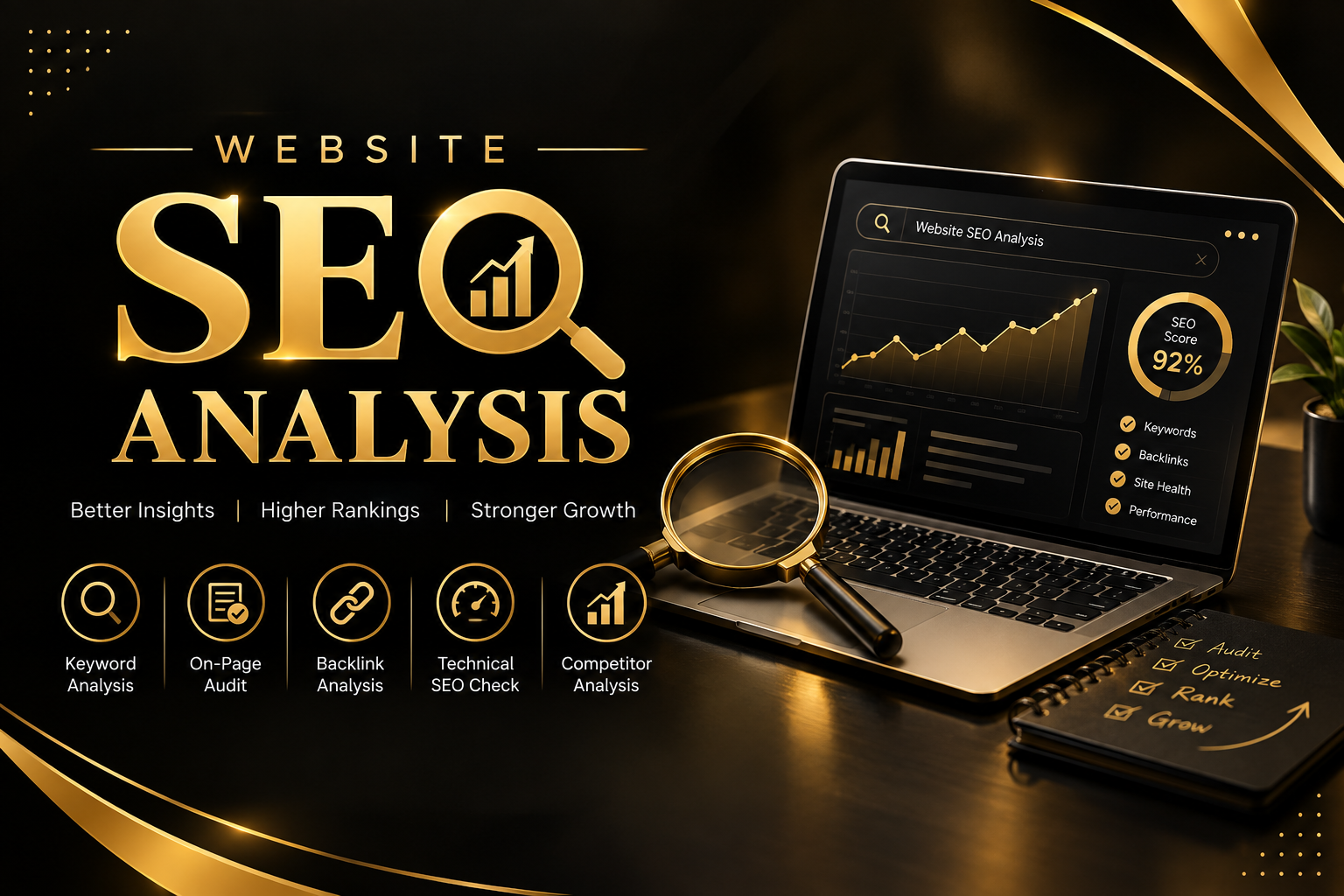
Website SEO analysis is the process of evaluating a website to understand how well it is optimized for search engines and users. It examines important factors that influence a website’s visibility, rankings, traffic, and overall performance in search results. An SEO analysis typically reviews on-page SEO, technical SEO, off-page SEO, content quality, keywords, website speed, mobile responsiveness, internal linking, backlinks, meta titles, meta descriptions, headings, and image optimization. It also identifies broken links, duplicate content, indexing issues, crawlability problems, and other technical errors that may affect search performance. By analyzing these elements, businesses can discover areas that need improvement and develop an effective SEO strategy. Regular website SEO analysis helps monitor progress, improve user experience, attract relevant organic traffic, and increase the chances of appearing higher in search engine results. It provides valuable insights for making data-driven improvements and maintaining a search-friendly website.
How SEO Works:-
SEO (Search Engine Optimization) works by improving a website so search engines can understand, trust, and rank it for relevant searches.
1. CrawlingSearch engines like Google use bots to discover and scan webpages, links, images, and other website content
.2. IndexingAfter crawling, search engines analyze the content and store useful pages in their index so they can appear in search results.
3. Keyword & Search IntentSEO identifies the words people search for and creates content that matches their search intent, such as informational, commercial, or transactional searches.
4. On-Page SEOThis includes optimizing titles, headings, content, URLs, images, internal links, and meta descriptions to make pages relevant and understandable.
5. Off-Page SEOBuilding website authority through quality backlinks, brand mentions, and other external signals can help strengthen a site's credibility.
6. Technical SEOWebsite speed, mobile usability, crawlability, site structure, HTTPS, and other technical factors help search engines access and understand the website.
7. RankingSearch engines evaluate many signals to determine which indexed pages are most relevant and useful for a particular search query
.In simple words:
SEO = Understand what people search for → create useful content → optimize the website → build authority → monitor and improve rankings.
Approaches Of SEO:-
The main approaches of SEO describe how businesses improve their website visibility and search rankings:
1 .White Hat SEO – Uses ethical and search-engine-approved methods, such as quality content, proper keyword usage, technical optimization, and natural link building
.In short:
White Hat → Ethical & sustainable
White Hat SEO refers to the use of ethical and search-engine-approved techniques to improve a website’s visibility and rankings. It focuses on creating high-quality content, using relevant keywords naturally, improving website performance, building genuine backlinks, and providing a positive user experience. Unlike manipulative SEO practices, White Hat SEO aims for sustainable, long-term growth while following search-engine guidelines.
Examples of White Hat SEO-Creating high-quality content that provides useful information to users
.Using relevant keywords naturally in headings, titles, and website content.

2. Black Hat SEO – Uses manipulative techniques to achieve faster rankings, such as keyword stuffing, cloaking, hidden text, and link schemes. These methods can lead to search-engine penalties.
In short:
Black Hat → Manipulative & risky
Black Hat SEO refers to SEO techniques that attempt to improve a website’s search-engine ranking by violating or manipulating search-engine guidelines. These methods focus on achieving quick rankings rather than providing genuine value to users
.
Common examples include keyword stuffing, hidden text, cloaking, link schemes, buying low-quality backlinks, duplicate content, and creating doorway pages. While such techniques may sometimes produce short-term improvements in visibility, they can negatively affect a website’s long-term performance. Search engines can detect many manipulative practices and may reduce a website’s visibility or apply penalties.
Black Hat SEO is therefore considered a risky approach to search optimization. .

.: 3. Grey Hat SEO – Uses techniques that fall between White Hat and Black Hat SEO. These methods may not clearly violate guidelines but can still carry risks if search engines consider them manipulative
.In short
:Grey Hat lies between the two
.Gray Hat SEO refers to SEO techniques that fall between White Hat SEO and Black Hat SEO. These methods may not directly violate search-engine guidelines, but they can involve practices that search engines may consider manipulative or risky.
Gray Hat SEO is often used to gain faster improvements in website visibility or rankings without clearly using prohibited techniques.Examples can include aggressive link-building, purchasing expired domains for SEO purposes, excessive guest posting, or creating content mainly to target search engines rather than users. The acceptability of some techniques can change as search-engine guidelines and algorithms evolve
.Gray Hat SEO may provide short-term benefits, but it carries more risk than following straightforward, guideline-compliant SEO practices. Businesses that want sustainable search visibility generally focus on helpful content, technical optimization, good user experience, and naturally earned links.